.svg)
Contact Us
RIC Development, LLC
17 State Street, Suite 2320 New York NY 10004
Since submitting the project in 2024, RIC Energy has continued working with the Town of Gainesville, its consultants and community members to study, review and refine the proposal. We are committed to a transparent process and to meeting every applicable requirement before construction can begin.
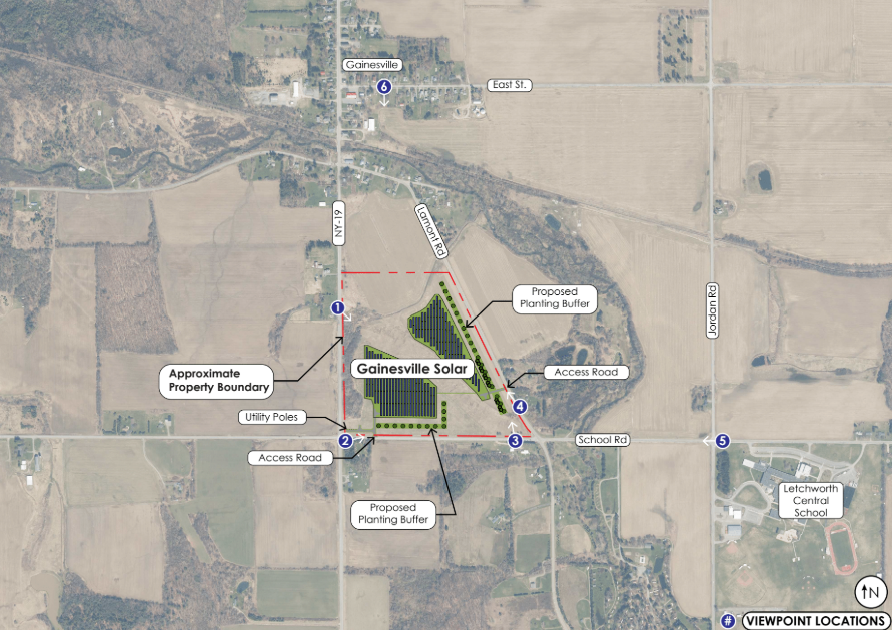
A Visual Impact Assessment (VIA) report analyzes the visibility of the project from roadways, adjacent properties, and publicly accessible locations. Conducted in March 2024 to document the sight lines when leaves are off the surrounding trees.
It was determined that the Gainesville Solar Project is visible from many of the six locations due to the Project’s elevation. While there is a plan to plant a buffer of trees along the perimeter of the site, due to the elevation of the site, such a planting buffer would not block views into the site from the north and east.
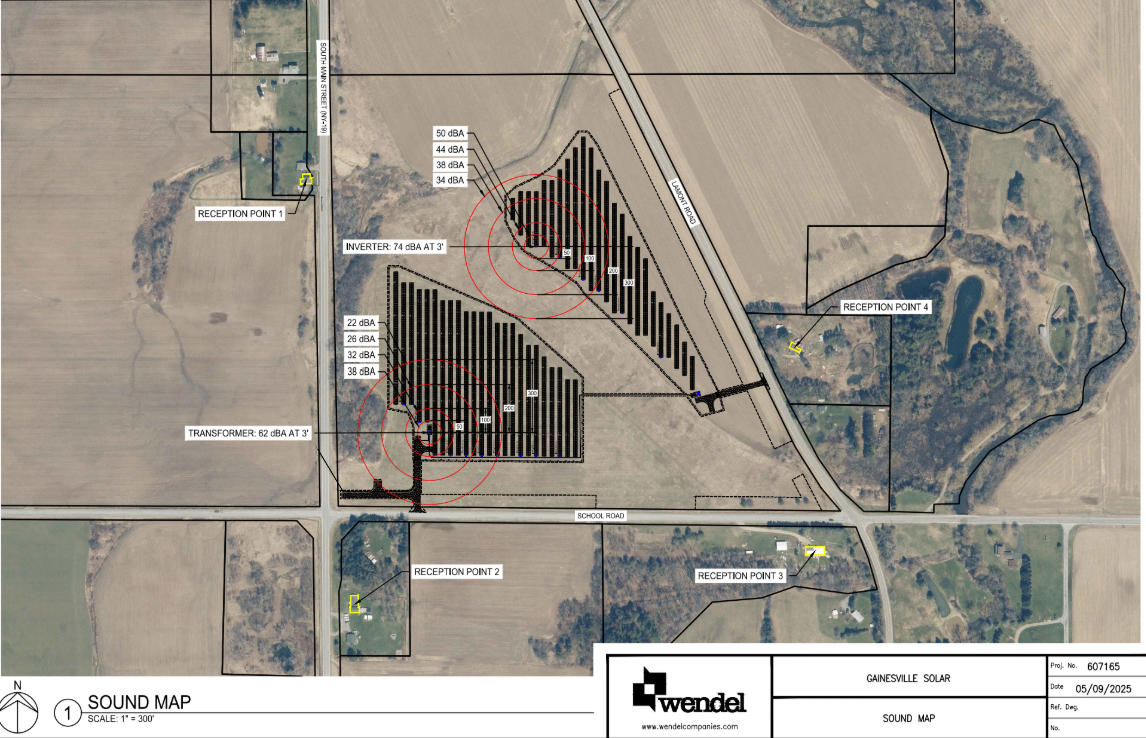
The Project areas were subjected to a noise assessment to determine the decibel levels at given distances from the Project’s equipment.
During the Project’s operation, concurrent operation of the solar plant site components and equipment was assumed to be limited to daytime hours only. After sunset, when the plant no longer receives solar radiation, the transformer will be in a lower power mode, the inverters will not produce noise, and the pad-mounted transformer will be energized but likely operating under low noise condition using natural draft cooling (no fans) due to reduced nighttime heat loads.
The results of the Noise Impact Analysis indicate the sound from the site is considered very quiet at all 4 Reception Points. The equivalent sound level heard at each of these Reception Points would range from a quiet library, soft whisper (15 feet) to a typical wilderness area.
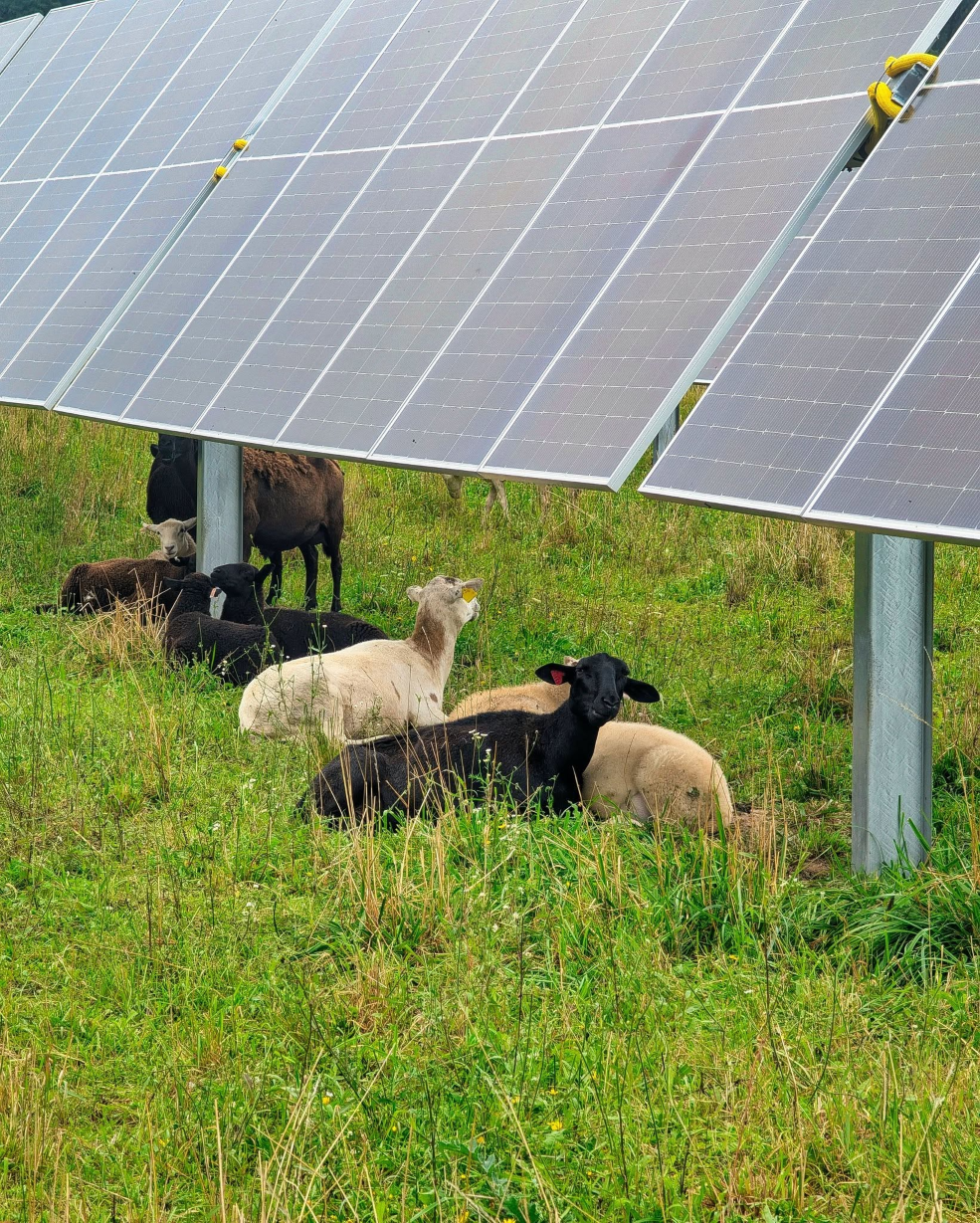
In response to the Town’s interest in maintaining agricultural activity on the property, RIC Energy is exploring the potential for sheep grazing for vegetation management within the solar facility. This practice, known as agrivoltaics, allows solar energy production and agriculture to occur on the same land.
RIC Energy has a strong relationship with agrivoltaics industry professionals in Western New York. This site has been selected as a optimal candidate for agrivoltaics to maintain agricultural use throughout the project’s life.
No final grazing commitment has been made. Any program would depend on the final project design, operational requirements, animal welfare considerations and an agreement with a qualified agricultural partner.


The tentative construction schedule assumes that mobilization and construction would commence 2-4 weeks after a building permit is approved. The expected overall timeline for construction and commissioning is approximately 18-20 weeks.
Construction is generally divided into several phases:

The solar array, inverters, transformers, and all safety systems are fully automated and remotely monitored 24/7 through an electronic system and do not require constant on-site supervision or manual operation. As described below, the Project requires only periodic inspections, servicing, and maintenance, conducted by dedicated crews, per schedule or as needed.
Beyond the construction period, the Project requires very minimal on-site personnel. Regularly occurring management operations include landscaping (solar grazing, mowing, and vegetation management) and annual inspections of the mechanical and electric installations and equipment. All these operations are performed by small crews and do not generate notable noise or traffic that is uncommon for an agricultural-residential or residential neighborhood.
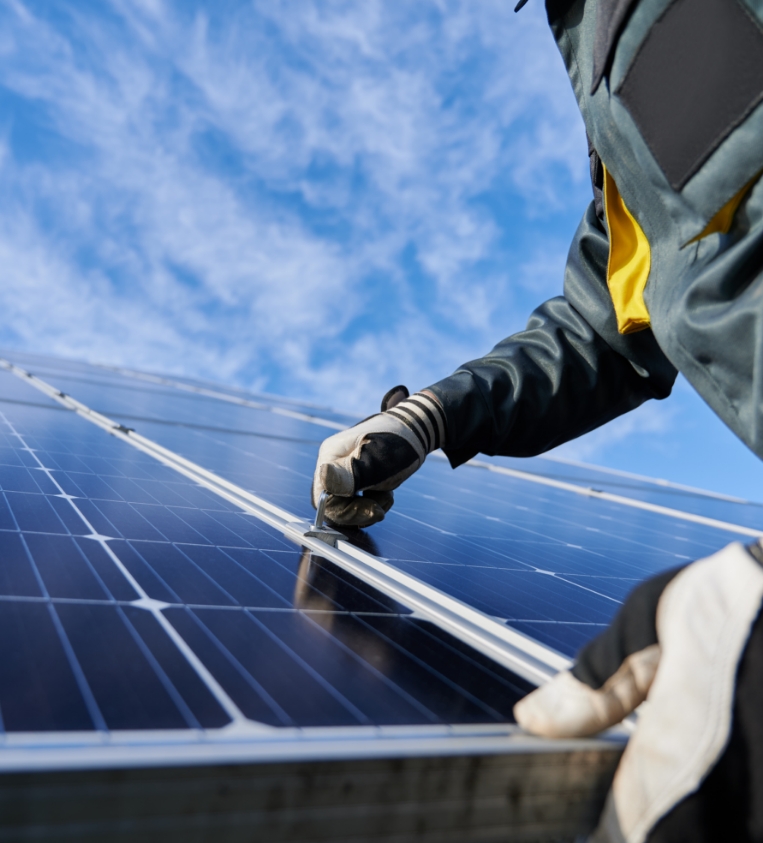

Solar panels available on the market today are typically designed to last for at least 25 - 30 years and the Project will continually maintain the solar arrays and related equipment for the life of the Project. At the end of their useful life, the Project may be renewed or they may permanently cease operations, at which time the Project removal plan (approved by the Town of Gainesville) will be implemented to remove, reuse, and/or recycle equipment and related materials to return the Project area to its pre-construction condition so that it is available for agriculture and other open space usages as determined by the landowner at that time.
The removal of the Project is, in many ways, the reverse of its construction. Much of the same equipment that was used in the construction of the Project, such as trucks and backhoes, will again be used in the removal of the components. Steel, cable, and concrete will be removed and transported off-site for recycling and/or disposal at approved facilities. Licensed off-site disposal facilities will be identified at that time, as the availability of facilities is likely to change in the decades during the Project’s useful life. The removal of the facility and the site restoration are guaranteed through a bond, whereby the Town of Gainesville is the beneficiary. It is also important to mention that it is in the interest of the Project to recycle the bulk of the materials and equipment, which are projected to have a higher salvage value than the total cost of the removal and restoration.